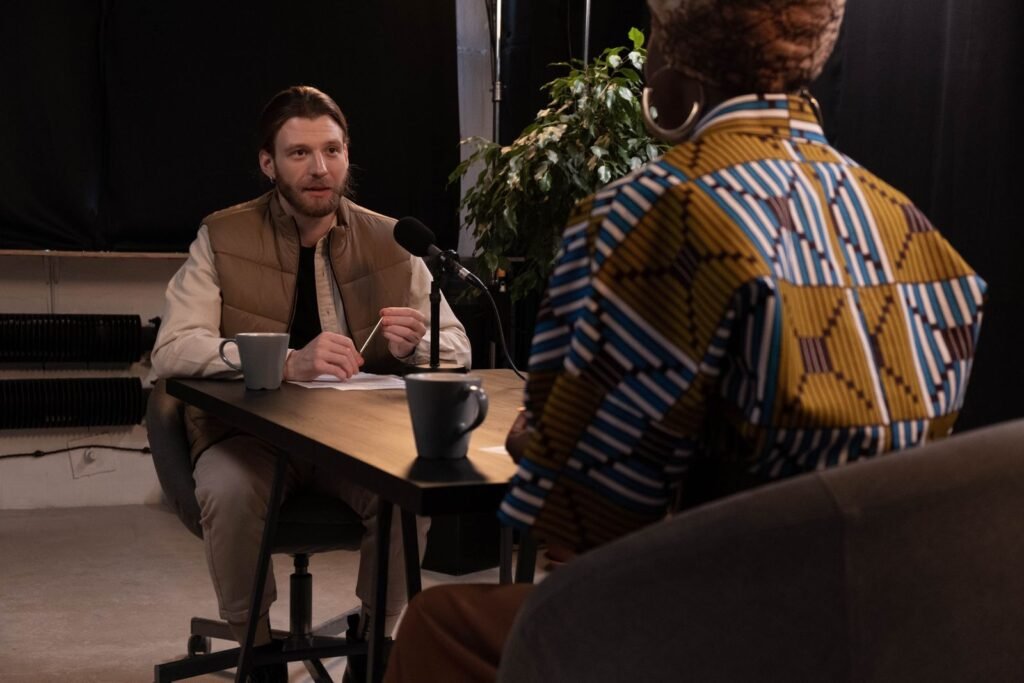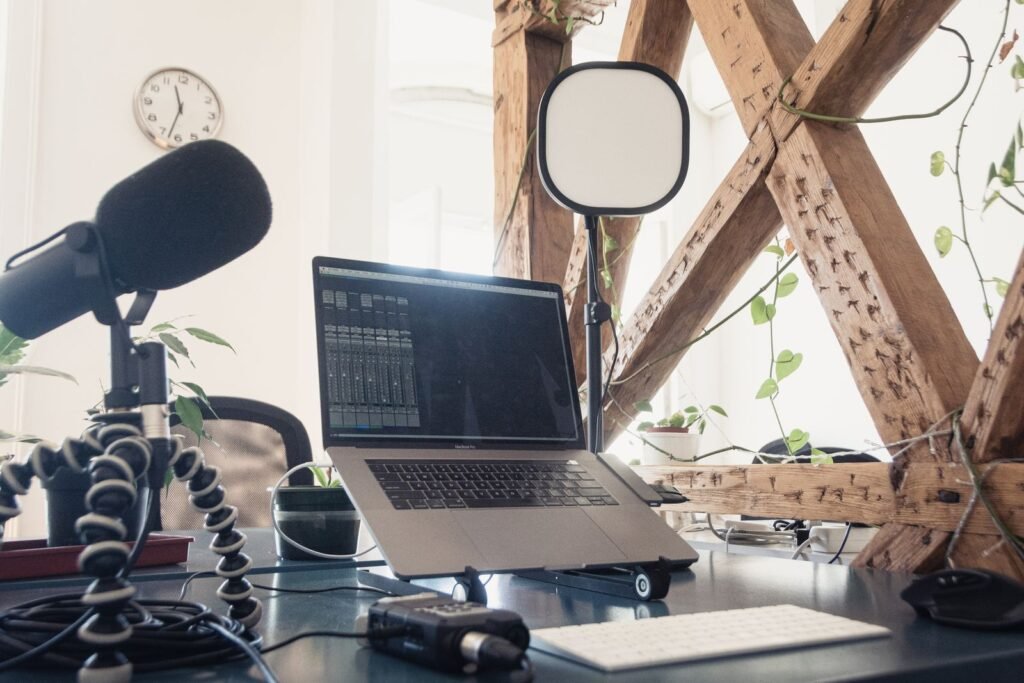
A one-hour podcast episode is full of moments that would work as short videos: a strong opinion, a funny story, a number that surprises people, a piece of advice someone will save. Most of them never leave the full episode. Turning your podcast into YouTube Shorts puts those moments in front of people who would never press play on a 60-minute video, and sends some of them back to the full episode.
This guide gives you a repeatable podcast to YouTube Shorts workflow that gets ten Shorts out of every episode, from recording to posting.
Why podcast clips work so well as Shorts
Shorts are no longer limited to 60 seconds. Since late 2024 YouTube counts any vertical upload of three minutes or less as a Short, and in early 2024 Shorts were already drawing 70 billion daily views (Social Media Today). That gives a good podcast moment enough room to set up a point and land it.
Podcasts are also unusually good raw material:
- People talk in complete thoughts. A guest answering a question often produces a self-contained 30 to 60 second answer.
- There is real disagreement and emotion. That is what makes people stop scrolling.
- The content is evergreen. Advice and stories stay relevant for months, so the clips keep getting views.
- Faces are on screen. A video podcast already has the human element that does well in short-form feeds.
What makes a good podcast clip
Before you cut anything, know what you are looking for. A strong Short from a podcast has five qualities:
- A hook in the first sentence. A bold claim, a question, a number or tension. “Most people price their first product too low” beats “So, about pricing…”.
- One idea. If you need two minutes of context, it is not a Short.
- No outside context needed. Avoid clips that start with “as I said earlier” or refer to “he” without saying who.
- A payoff. End on the punchline, the lesson or the answer, not halfway through a sentence.
- The right length. Most podcast Shorts land between 25 and 60 seconds. Longer is fine if the story holds.
10 kinds of moments to look for in every episode
| Moment | What it sounds like | Why it works |
|---|---|---|
| Hot take | “Honestly, college is not worth it for most people in tech.” | Starts a debate in the comments |
| Personal story | “The day my first business failed, I…” | People stay to hear how it ends |
| Specific number | “We went from 2,000 to 200,000 followers in six months.” | Concrete and easy to believe |
| Practical tip | “Before you post, check this one setting.” | Saved and shared |
| Myth-busting | “Posting at 6 pm does not matter. This does.” | Challenges what viewers think they know |
| Mistake warning | “Don’t sign a brand deal without this clause.” | Fear of loss holds attention |
| Funny moment | A joke, a reaction, an awkward pause | Shared to friends |
| Clear definition | “Here is what ‘retention’ actually means.” | Search-friendly and useful |
| Prediction | “In two years, every shop will…” | Invites people to agree or argue |
| Emotional moment | A guest talking about family, failure or faith | Builds connection with the show |
Go through your episode with this list and you will usually find more than ten candidates. Keep the strongest ten.
The podcast to YouTube Shorts workflow, step by step
Step 1: Record with clips in mind
You will get better Shorts if you plan for them while recording:
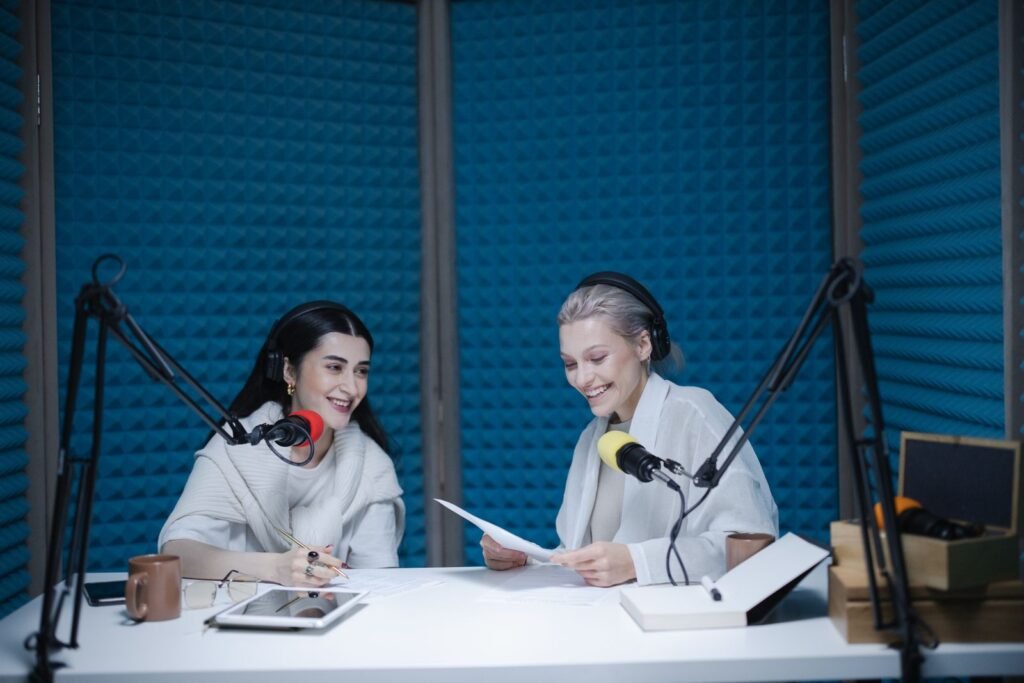
- Give each person a camera, or at least frame each person well. A wide shot of two people is hard to turn into a sharp vertical clip.
- Record in 4K if you can. A vertical crop keeps only about a third of the frame’s width, so a 1080p camera gives roughly 608 pixels of real width. 4K gives you twice that.
- Use separate microphones. Clean audio gives you accurate captions and a better transcript to search.
- Ask short, specific questions. “What is the biggest mistake new creators make?” gets a clippable answer. “Tell us about your journey” usually does not.
Step 2: Find the moments
You can do this by hand: listen at 1.5× speed, note timestamps of anything from the table above, and write one line about why each moment works. That takes about as long as the episode itself.
Or let AI do the first pass. AI Short Clipper’s clip finder reads the full transcript, picks moments that start with a hook and end on a payoff, and gives each one a score broken down into hook, flow, value and trend. You can ask for an exact number of clips (for example ten) and a length range (for example 30 to 60 seconds), then keep the ones you like.
Step 3: Frame two speakers properly
The most common problem with podcast Shorts is framing. A center crop shows the table between two people. You need the crop to follow whoever is talking, switch on camera cuts, and stay still when nobody moves. We cover this in detail in how to convert horizontal video to vertical. If a moment is really about the exchange between two people, show both in a fit layout or a split screen.
Step 4: Add captions
Many people watch Shorts muted, so burned-in captions are essential. Use two to four words per line, a bold readable style, and highlight the key word in each line. If your podcast is in Urdu, read our guide to Urdu captions for Reels, which also applies to Shorts.
Step 5: Write a hook title for the first seconds
The first frame needs a reason to stay. Put a short line of text at the top of the screen for the first two or three seconds, such as “The pricing mistake that cost me a year”. AI Short Clipper suggests three different hook lines for every clip, so you can pick the one that fits your voice.
Step 6: Tighten the edit
Remove long pauses and filler sounds, but do not cut every breath. Over-cut podcast clips feel robotic. Keep natural pauses before punchlines. Start the clip on the first word of the hook, not on a “so…”.
Step 7: Add a cover, title and description
Shorts are often found through search and the channel page as well as the feed, so the title matters. Use the words people would search for (“how to price a product”, “podcast tips”). Mention the full episode in the description, and link the Short to the full video using YouTube’s related video option so interested viewers can watch the whole conversation.
Step 8: Schedule the ten Shorts over two weeks
Ten Shorts posted on the same day compete with each other. Spread them out, one per day or one every other day, so each gets its own chance in the feed. Start with your strongest clip, and watch which kinds of moments your audience responds to so you know what to look for in the next episode.
A sample two-week plan for one episode
| Day | Clip | Notes |
|---|---|---|
| 1 | Best hot take | Lead with your strongest clip |
| 2 | Personal story | |
| 3 | Practical tip | Good for saves and shares |
| 5 | Specific number | |
| 6 | Funny moment | |
| 8 | Myth-busting | |
| 9 | Mistake warning | |
| 10 | Definition | Search-friendly title |
| 12 | Prediction | Ask a question in the description |
| 13 | Emotional moment | Link to the full episode |
Leave gaps for the next episode’s clips, and repeat.
Mistakes that waste good podcast moments
- Starting with the question instead of the answer. Cut the host’s long question; start on the guest’s first strong sentence.
- Clips that end mid-thought. Always end on a full sentence and a natural pause.
- Tiny, unreadable captions. Test on a phone before posting.
- Posting the same clip to every platform with another app’s watermark. Export a clean file and upload natively to each app.
- Forgetting your guest. Tag them and send them the clips. Guests who share clips bring their own audience to your channel.
Frequently asked questions
How long should a podcast Short be?
Between 25 and 60 seconds works for most podcast moments. YouTube allows Shorts up to three minutes, so a strong story can run longer, but cut anything the clip does not need.
How many Shorts should I make from one episode?
Ten is a good target for a one-hour episode. Longer or more varied episodes can give 15 to 20. Quality matters more than count, so drop any clip you would not watch yourself.
Do I need my guest’s permission to post clips?
It is good practice to agree on clips when you invite a guest, and many podcasts include it in their guest agreement. Never clip other people’s podcasts, TV shows or films without permission; those clips can be claimed or removed for copyright.
Can I turn an audio-only podcast into YouTube Shorts?
Yes. Use an audiogram (a waveform with captions over your cover art) or a simple photo with large animated captions. Video podcasts usually perform better, so consider recording video from your next episode.
Will Shorts take views away from the full episode?
In practice Shorts bring in people who would not have found the episode otherwise. Linking each Short to the full video turns that new reach into longer watch time.
The short version
Going from podcast to YouTube Shorts is a repeatable process, and every episode holds at least ten Shorts. Look for hot takes, stories, numbers, tips and emotional moments; start each clip on the hook and end on the payoff; follow the active speaker in 9:16; add bold captions and a hook title; then post one clip a day for two weeks. If you would like the moment-finding, reframing and captions done for you, turn your next episode into Shorts with AI Short Clipper.

Written by AI Short Clipper Team
Part of the AI Short Clipper team, helping creators turn long videos into short clips.